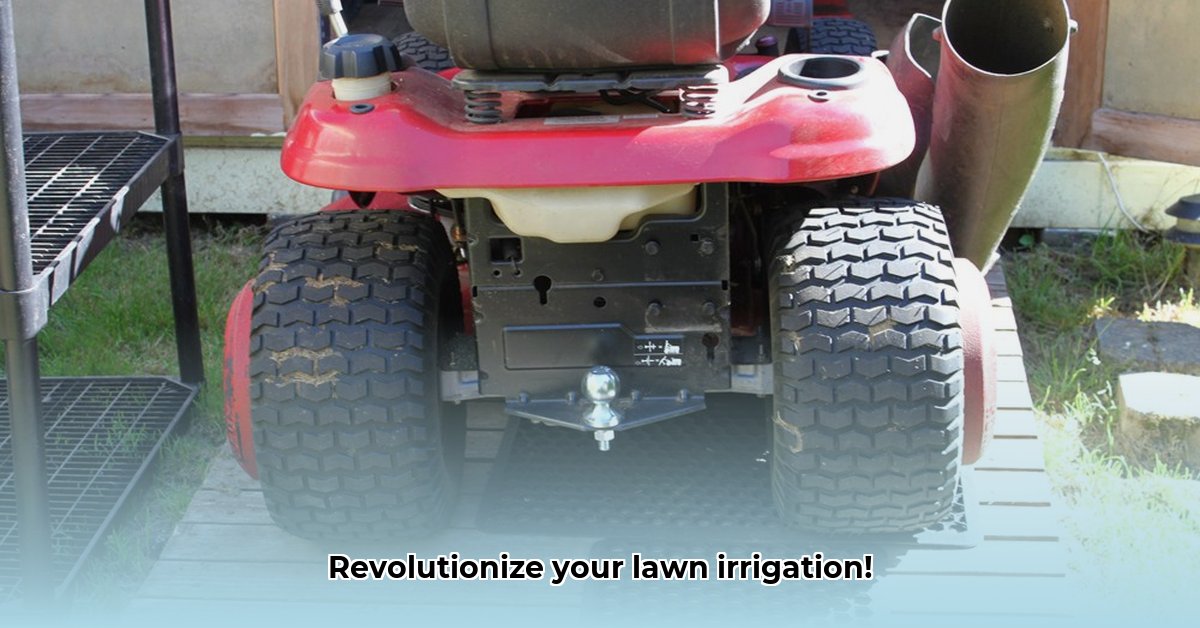
Lawn Tractor Ball Hitch: Your Secret Weapon for Sustainable Farming
Ever considered your lawn tractor could be a key player in creating a sustainable and highly productive farm? A simple lawn tractor ball hitch unlocks surprising efficiency, especially when paired with precision irrigation techniques. This guide shows how to leverage this readily available tool for significant improvements in water management and overall farm productivity. For more information on lawn tractor attachments, check out this helpful resource.
Smart Watering: Maximizing Efficiency and Yield
Precision irrigation, contrary to its name, is about simple water wisdom. Instead of wasteful flooding, you deliver the precise amount of water, exactly where and when it’s needed. This conserves water, fosters robust plant growth, and reduces waste – substantial gains for sustainable farming. But how can a lawn tractor help? The ball hitch connects your tractor to specialized irrigation equipment, transforming it into a precision watering machine.
Implementing Precision Irrigation: A Step-by-Step Guide
Let's translate theory into practice. The following steps will guide you through leveraging your lawn tractor ball hitch for optimal water management:
Step 1: Assess Water Needs. Begin by understanding your crops' individual water requirements. Consider sun exposure and soil type to tailor watering schedules for specific areas. Detailed soil analysis reveals crucial information such as water-holding capacity and drainage, informing precise water application strategies.
Step 2: Select Appropriate Irrigation Equipment. Many options are compatible with a lawn tractor ball hitch, including drip irrigation (delivering water directly to roots) and soaker hoses (slowly releasing water). Choose based on your crops, farm size, and budget. Remember your tractor’s weight capacity when selecting equipment.
Step 3: Safe Hitch Connection. Carefully attach the irrigation equipment to your lawn tractor hitch, strictly following the manufacturer's instructions. Safety is paramount; ensure a secure connection before operation.
Step 4: Controlled Watering. Drive slowly and steadily, distributing water according to your pre-determined plan. Adjust speed and water flow as needed to achieve optimal coverage and water penetration.
Step 5: Monitor and Adapt. Continuously monitor soil moisture and adjust your watering schedule accordingly. Observing plant response allows for fine-tuning for maximum yield and efficiency.
Weighing the Pros and Cons: A Realistic Assessment
Every system presents advantages and disadvantages. Here’s an objective look at precision irrigation using a lawn tractor ball hitch:
| Advantages | Disadvantages |
|---|---|
| Significant water and cost savings | Requires initial investment in equipment |
| Increased crop yields and overall productivity | Demands some mechanical aptitude |
| Precise water control | System malfunctions are possible; maintenance needed |
| Environmentally friendly | May not suit every farm size or layout |
| Enhanced efficiency and reduced labor | Requires dedicated planning and monitoring |
Expanding Your Hitch's Potential: Beyond Irrigation
The lawn tractor ball hitch's utility extends beyond irrigation. It's ideal for pulling small trailers carrying tools or fertilizer spreaders, contributing to sustainable farming practices. Consider its potential to streamline various farm tasks for enhanced efficiency.
Did you know that precision irrigation can increase water use efficiency by up to 50%, leading to substantial cost savings and improved crop yields? (Source: USDA)
Dr. Emily Carter, Agricultural Engineering Department, University of California, Davis, adds: “Precision irrigation is not just about saving water; it’s about creating a healthier, more productive farm environment.” This targeted approach promotes optimized resource use and aligns perfectly with sustainable agricultural practices.
This holistic approach, combining the convenience of a lawn tractor ball hitch with the efficiency of precision irrigation, presents a pathway to increased farm productivity while respecting environmental responsibility. The initial investment is quickly offset by long-term cost savings and improved yields. By embracing smart irrigation techniques, you can cultivate a thriving and sustainable farm.